Download the App
Search for Hot IPTV or HotPlayer in your Smart TV's App Store or Google Play Store. Click install and wait for the download to complete.
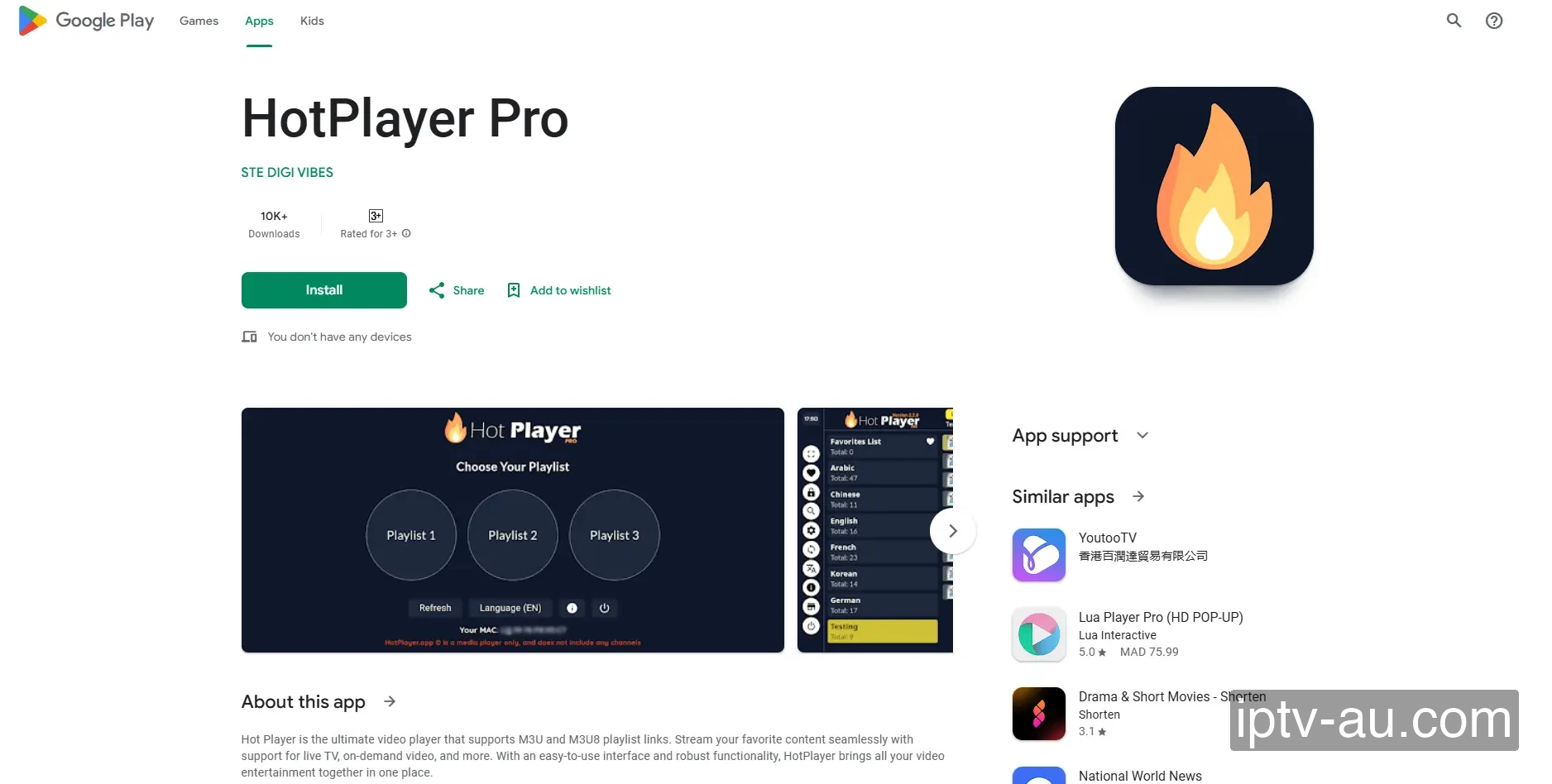
The app features a distinctive fire icon logo.

How do I set up IPTV on Hot Player? To configure Hot Player for IPTV, install the application on your device. Once installed, launch the app and choose "Login with Xtream Codes API" (or enter your M3U link) to securely input your subscription credentials and load your live TV and VOD library.
| IPTV Subscription | IPTV Hot Player |
|---|---|
| Pricing | Paid (€7.99) |
| Free Trial | 7 Days |
| App Size | ~15 MB |
| Compatibility | Smart TV, Android, Firestick |
| Setup Time | 4 mins |
| Official Website | Visit Site |
| App Support | Website Form |
| Google Play | View on Play Store |
Hot IPTV (also commonly branded as HotPlayer) is a lightweight, MAC-address based media player designed primarily for Smart TVs and Android TV boxes. Known for its incredible loading speeds and stability, it allows users to upload their M3U playlists via a web portal, rather than typing long URLs directly on the TV screen.
Search for Hot IPTV or HotPlayer in your Smart TV's App Store or Google Play Store. Click install and wait for the download to complete.
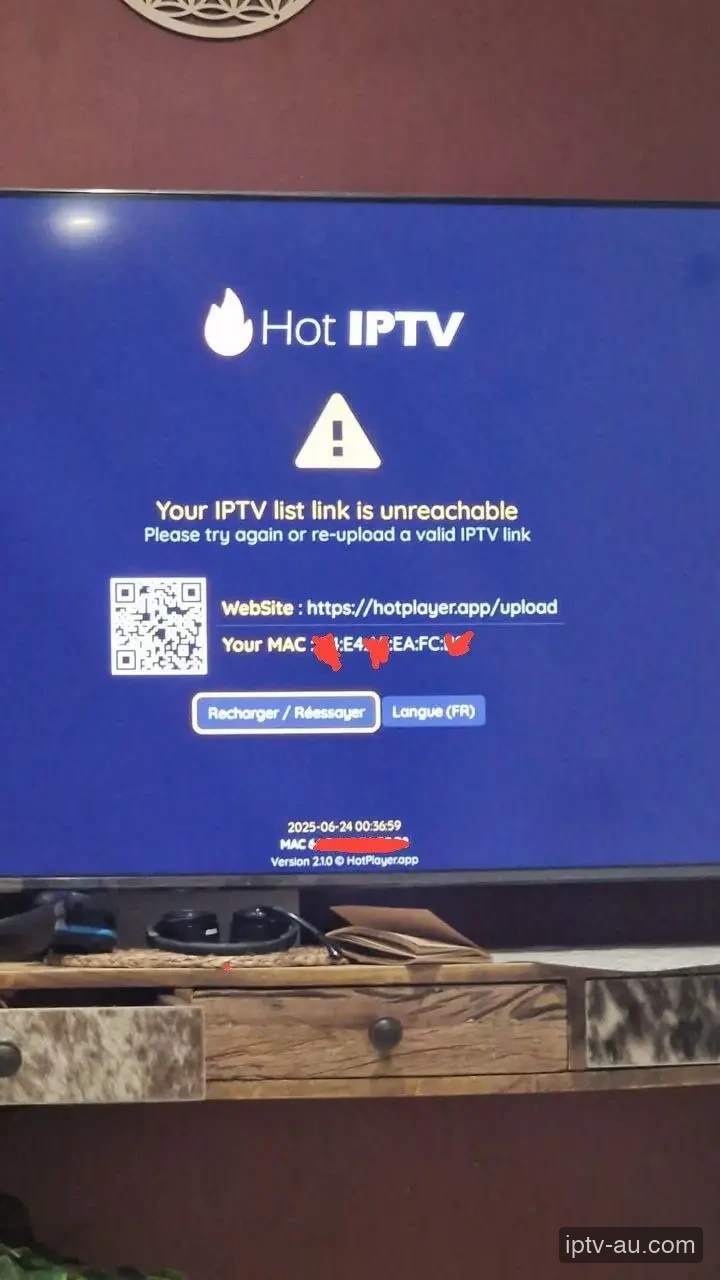
Open the Hot IPTV app on your TV. You will see a warning screen displaying your unique MAC Address and the official upload website link.
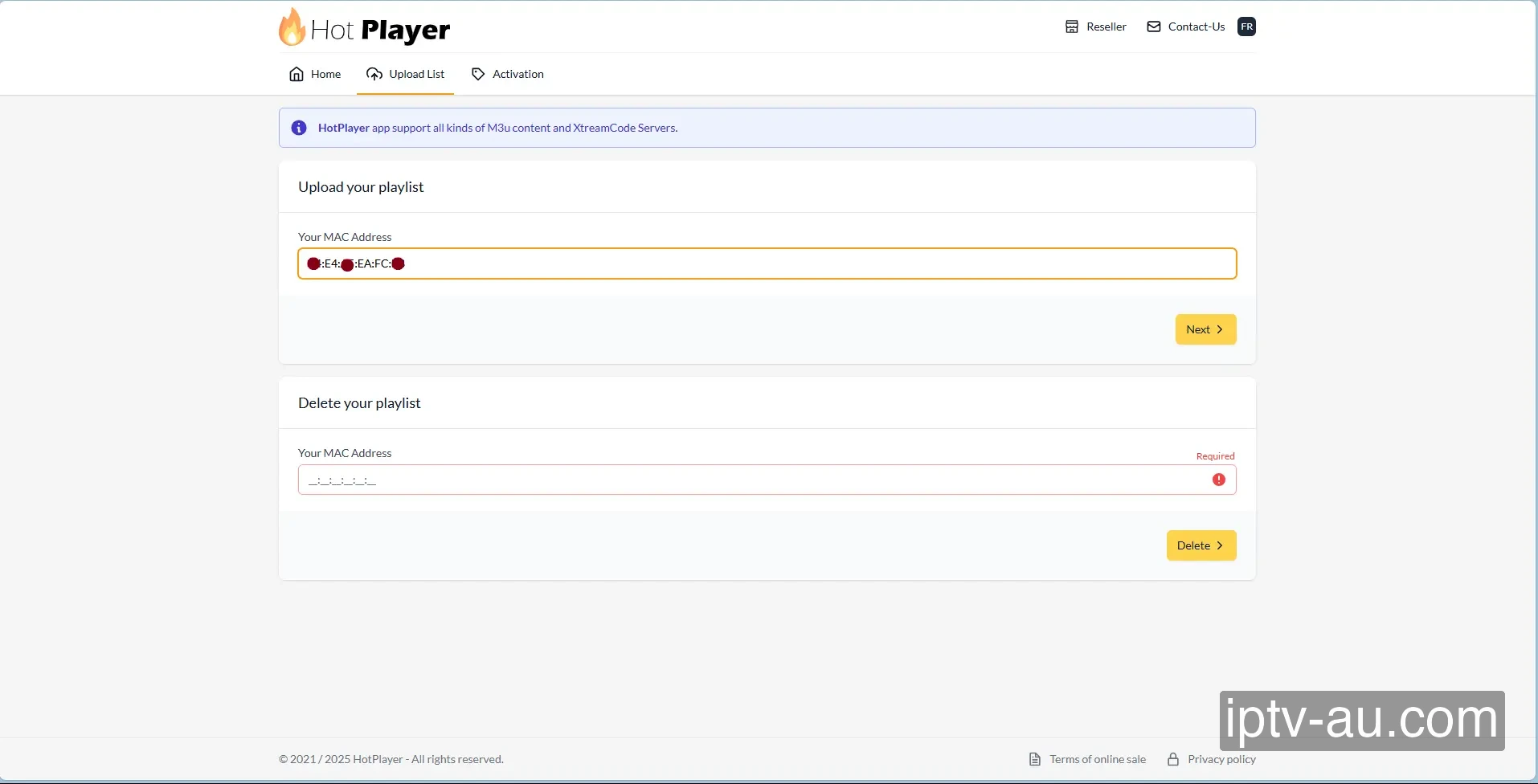
On your phone or computer, open a web browser and go to https://hotplayer.app/upload. Enter the MAC address you noted from your TV and click Next.
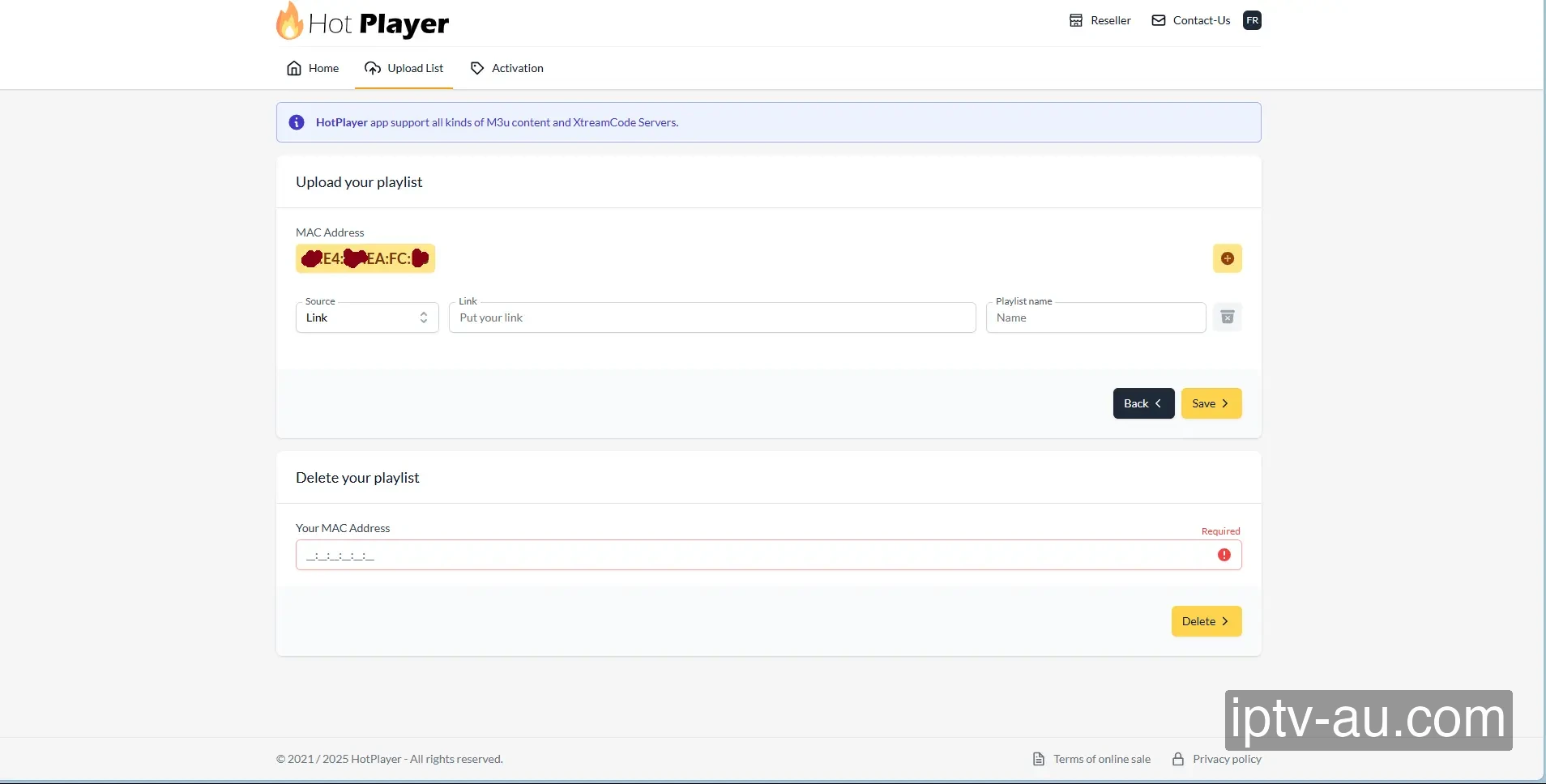
Once logged in, paste the M3U Link provided by IPTV Australia into the "Link" field. Enter any name (e.g., "IPTV Australia") in the Playlist Name field, and click Save.
Go back to your TV. Click the "Recharger / Réessayer" (Reload) button on the screen. The app will connect to our servers and load all your Live TV, Movies, and Series.
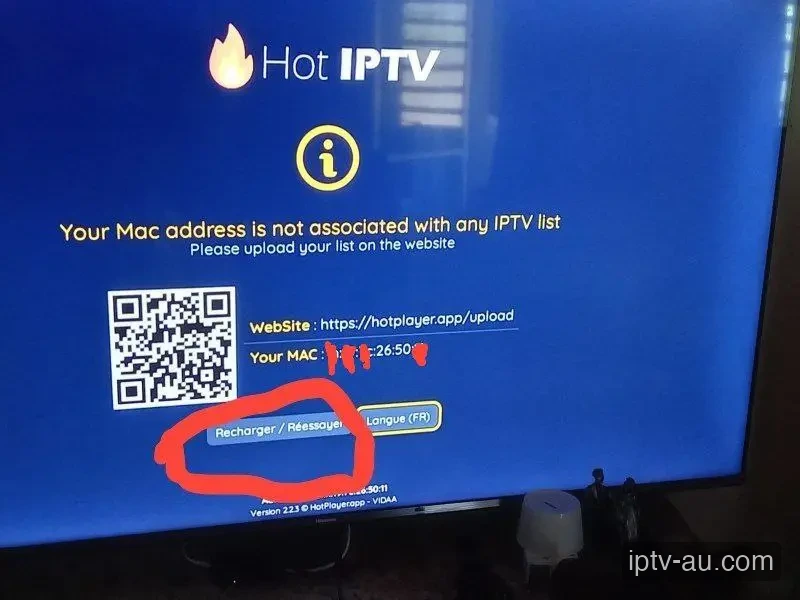
Ensure you are typing the MAC address exactly as shown on your TV, including the colons (:) between the characters.
Double-check your M3U link. Make sure no extra spaces were added at the beginning or end of the URL when pasting it into the web portal.
If the app freezes while loading channels, unplug your Smart TV from the power outlet for 30 seconds to clear its memory, then try again.
First, reboot your internet router and your streaming device. If the issue persists, your ISP may be throttling the connection. Consider using a VPN or clearing the app cache.
Force an update of the EPG from the app settings. Some apps require you to manually enter the EPG URL (ending in .xml) if you logged in via an M3U playlist instead of Xtream Codes. Learn more in our Ultimate EPG Troubleshooting Guide.
Double-check your Username, Password, and Server URL. Typos are the #1 cause of login failures. Ensure the URL matches exactly, including the http:// and the port number at the end.
If your live TV works but VOD is missing, you may need to check the "Include VOD" box during setup, or manually trigger a VOD refresh in the app's settings menu.
While some apps are cross-platform, many are specifically designed for Android TV and Firestick. Check the Apple App Store for iOS alternatives like Smarters Player Lite or UHF.
This is usually caused by corrupted cache data. Go to your device's Settings > Apps, find the IPTV app, and select a System Cache Clear. If the issue persists, reinstall the application.
Live TV requires a constant, uninterrupted stream of data, while VOD can buffer ahead. Ensure your device is connected via Ethernet. If you must use Wi-Fi, ensure you are on a 5GHz network close to the router.
This indicates a video codec compatibility issue. Go to the app's Player Settings and toggle the decoder between Hardware (HW) and Software (SW). HW decoding is recommended for most modern devices.
Live TV and VOD often stream from different server ports. If Live TV works but VOD doesn't, your ISP might be blocking the VOD port. Restart your router or enable a premium VPN to bypass the block.
Double-check your credentials. The Xtream Codes API requires exact case-sensitivity. A very common mistake is having an invisible trailing space at the end of your username, password, or server URL.